Having a pet with a skin, ear, nail or coat condition can feel overwhelming. We can help.
Dermatology Appointments
-
Our Initial dermatology appointments are perfect for chronic, recurrent or severe skin problems. We se aside 1 hour to get to know you and your pet so we can get to the bottom of your pet’s itch, skin or ear problems.
Before your appointment we will evaluate your pre-visit questionaire, and where available, your pet’s previous veterinary history and any test results. This means that our time together can be dedicated to giving your pet a thorough check over. During the appointment we often take swabs to look at under the microscope to check for infections, and we may also perform skin scrapes, hair plucks and a Wood’s lamp examination (All included in consultation fee).
Once the examination, skin testing and history review are completed we will discuss the diagnosis, any further diagnostic testing that might be required, and put together a treatment plan that works for you and your pet.
Please book online - You will need to complete a short questionaire and make payment to secure your appointment at the time of booking. If you need to cancel or change your appointment or if you are having any trouble with the online booking platform please contact us directly by phone or e-mail. Description text goes here
-
A 30 minute appointment for follow-ups and short dermatology consultations.
-
Telephone or online appointment for veterinary dermatology advice.
Remote advice for current patients seen by Dr Gillian at Canberra Veterinary Dermatology within the past 6 months.
Or for veterinary dermatology advice that is not specific to a patient.
Ear Care
We have extensive experience in treating ear conditions in dogs and cats
Allergies are the most common cause of ear canal inflammation and infection in pets however other causes can include foreign bodies in the ear (eg. grass seed awns), hormonal conditions, immune-mediated conditions as well as anatomic abnormalities such as very narrow ear canals, ear canal growths or polyps, or middle ear disease.
For any recurrent or stubborn ear issue we recommend booking a 1-hour initial dermatology appointment with Dr Gill for an assessment and treatment plan.
Video Otoscopy
If your pet has an ear issue, we may recommend video-otoscopy.
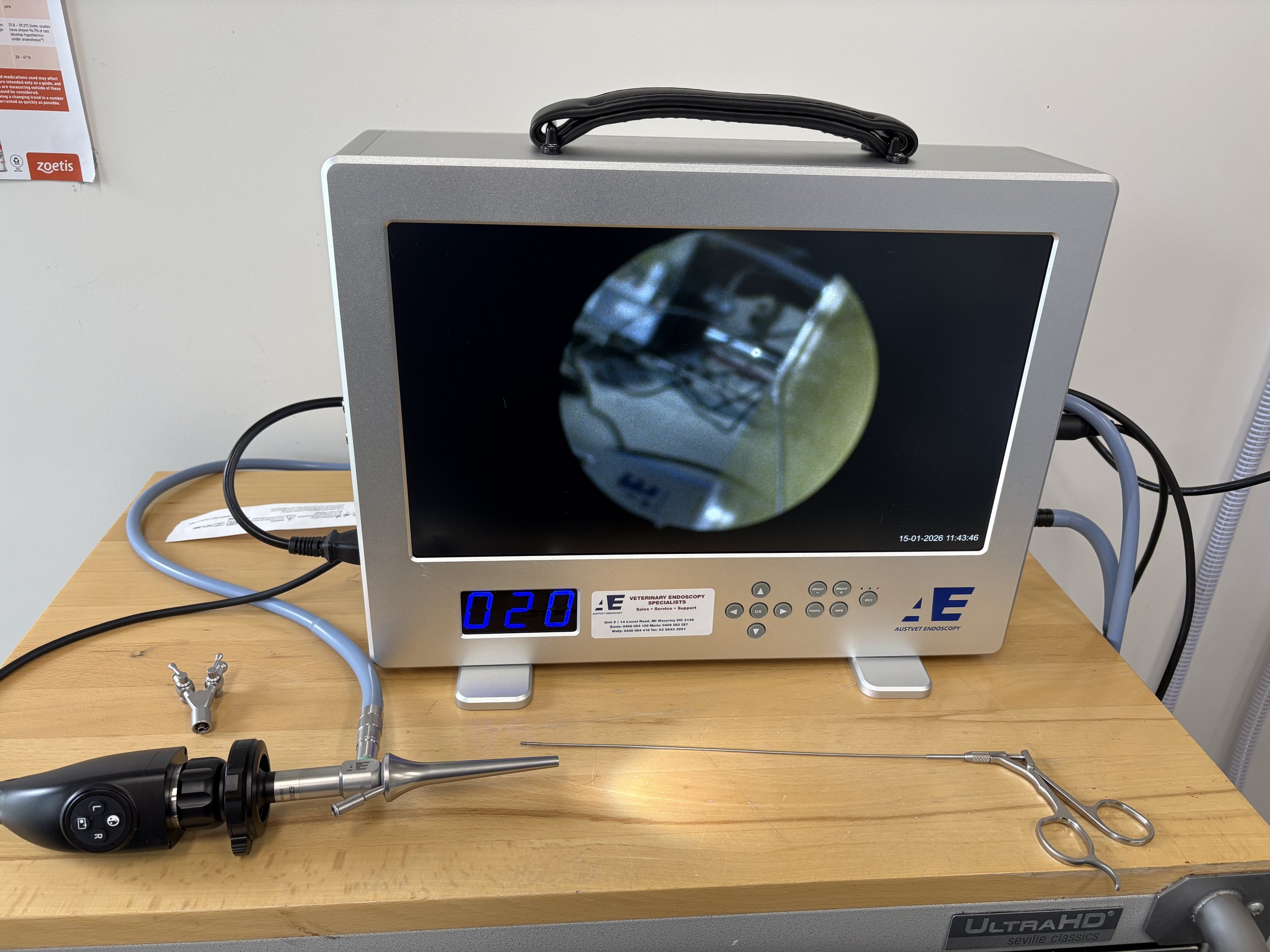
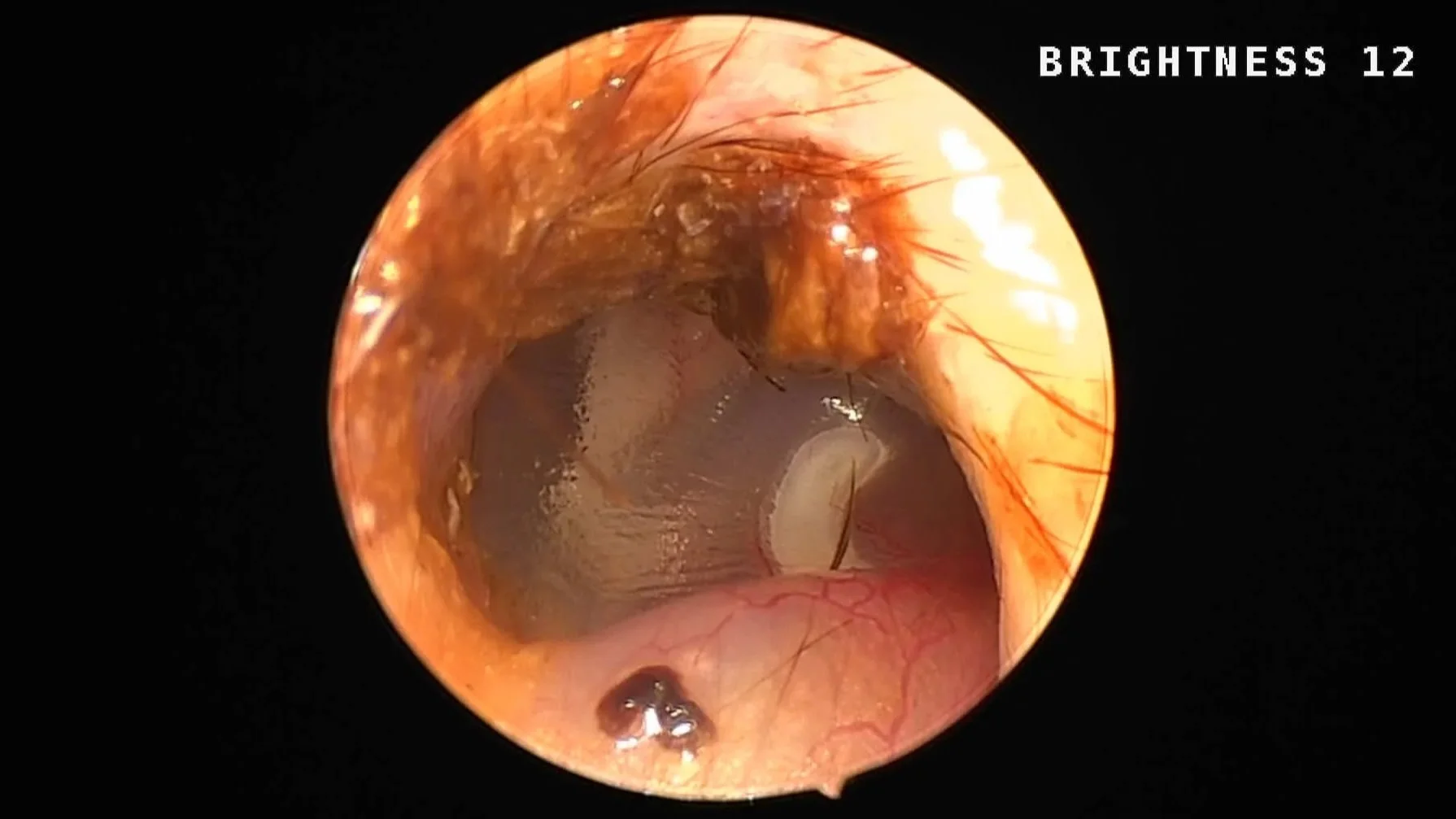
Our video-otoscope has a bright light and magnification and a clear image is viewed in real-time on a large screen allowing accurate evaluation of the ear canal and eardrum (also known as the tympanic membrane).
It allows us to identify underlying problem such as foreign-bodies, tumours, polyps, impacted debris or deep ear complications such as ruptured tympanic membranes and middle ear infection (otitis media).
The video-otoscope has an instrument port so we can pass instruments such as grabbing forceps to safely retrieve foreign bodies, flushing catheters for deep ear cleaning and biopsy forceps for sampling of abnormal tissue.
For ear canals where there is a lot of debris or chronic infection a video-otoscope guided deep ear flush can be an important step towards resolving the ear issue.
Advanced imaging such as CT scan may be recommended prior to an ear-flush if there is any concern for otitis media.
Video-otoscopy is usually performed under general anaesthesia for your pet’s comfort.
Allergy Testing
Our Initial dermatology appointments are perfect for chronic, recurrent or severe skin problems. We se aside 1 hour to get to know you and your pet so we can get to the bottom of your pet’s itch, skin or ear problems.
Before your appointment we will evaluate your pre-visit questionaire, and where available, your pet’s previous veterinary history and any test results. This means that our time together can be dedicated to giving your pet a thorough check over. During the appointment we often take swabs to look at under the microscope to check for infections, and we may also perform skin scrapes, hair plucks and a Wood’s lamp examination (All included in consultation fee).
Once the examination, skin testing and history review are completed we will discuss the diagnosis, any further diagnostic testing that might be required, and put together a treatment plan that works for you and your pet.
Please book online - You will need to complete a short questionaire and make payment to secure your appointment at the time of booking. If you need to cancel or change your appointment or if you are having any trouble with the online booking platform please contact us directly by phone or e-mail.
Allergen-Specific Immunotherapy For The Treatment Of Atopic Dermatitis
Allergen-specific immunotherapy (ASIT) is a treatment approach that involves administering controlled, gradually increasing doses of the allergens to which your pet has tested positive. The goal is to modify your pet’s immune response to allergens, reducing sensitivity and thereby decreasing the clinical signs of itching and skin inflammation.
Treatment Efficacy More than two-thirds of dogs treated with ASIT experience good to excellent clinical improvement. Responses vary among individuals, with most pets having a reduction in symptoms and are able to reduce their reliance on medications.
Treatment Timeline It is important to understand that ASIT requires patience. Most dogs and cats that respond favorably to treatment show improvement within the first 6 - 12 months. We recommend completing at least 12- 18 months of therapy before evaluating its effectiveness. ‘Rush’ protocols may be suitable for some pets and can accelerate the response to immunotherapy.
Safety Profile ASIT is considered a safe treatment option with minimal side effects. The most frequently reported adverse effect is temporary increased itching, which can typically be managed with antihistamines. Serious systemic reactions are uncommon.
How is it given? Immunotherapy can be formulated to be given by injection under the skin( usually once every 2-4 weeks), or it can be given by sublingually (liquid into the mouth once or twice a day)
Concurrent Management Your pet may require additional treatments alongside immunotherapy, particularly during the initial phase. These may include medications to control itching, support healthy skin and prevent secondary bacterial or yeast infections.
Determining Candidacy ASIT must be individualized for each patient. We will first confirm the diagnosis of atopic dermatitis based on your dog's medical history and clinical presentation, then identify specific allergens through intradermal and/or serum allergy testing. The immunotherapy formulation will be customised based on these results.
Long-term Outlook For pets that respond well, ASIT can provide effective, sustained management of atopic dermatitis over many years, with continued efficacy and an excellent safety profile.
Food Allergies
Allergy Care
Atopic Dermatitis
If your pet has atopic dermatitis (environmental allergies), allergy testing can help identify what tree pollens, grass pollens, moulds, insects or mites you pet is reacting to in their environment.
Because most allergens in the environment are hard to avoid, the main reason for allergy testing is to identify which allergens to include for allergen-specific immunotherapy.
There are two types of allergy tests available for pets:
Intradermal skin testing is regarded as the ’gold standard’ for allergy testing. Intradermal testing examines the response of the skin to various common environmental allergens. Testing involves a light sedative so pets lie very still while tiny amounts of over 60 allergens, as well as positive and negative controls are injected one by one into the skin. The skin reactions are scored 1-4 and those rated 2 and above indicate a sensitivity.
Blood allergy test (Heska Allercept® or Nexmune PAX®) is often combined with intradermal skin testing for a complete assessment of a pet’s allergies. The blood test measures allergen-specific immunoglobulin (IgE) in the blood. If skin testing is not possible for medical reasons, an IgE blood test may be used to guide allergen selection for immunotherapy.
Atopic dermatitis (atopy) is a chronic allergic skin condition caused by your pet’s immune system over-reacting to normally harmless things in the environment such as pollens, moulds and house dust mites. Pets with atopic dermatitis also often have skin barrier abnormalities that allow allergens to more easily penetrate the skin and the weak skin barrier can also pre-dispose them to dry skin and skin infections.
Pets with atopy are often itchy and may suffer from recurrent skin or ear infections.
Atopic dermatitis is a clinical diagnosis made by your vet based on their clinical signs and once food, flea and contact allergies have been ruled out.
While there is no cure for atopic dermatitis, the condition can be managed with appropriate long-term treatment strategies such as symptom control with itch and inflammation-relief medication, skin barrier support and infection control.
The only therapy that can modify the course of atopic dermatitis, and reduce reliance on medications is an individually tailored treatment called allergen specific immunotherapy which is designed for an individual pet following allergy testing. (see below)
Why choose immunotherapy?
Immunotherapy addresses the underlying cause of atopic dermatitis rather than just treating symptoms. By re-training your pet's immune system to be less reactive to environmental allergens, it provides lasting relief from chronic itching, inflammation, and secondary skin infections. Most pets experience significantly reduced flare-ups of their allergies over time, leading to a much-improved quality of life with less discomfort.
Immunotherapy can reduce or eliminate your pet's dependence on ongoing symptomatic medications, which means fewer vet visits for medication adjustments and lower long-term costs.
Immunotherapy has also been shown to stop the progression of clinical signs which is an important consideration for young dogs as allergy symptoms can get worse year after year.
Elimination Diet trials
Food allergies are quite a common cause of itch, skin and ear infections, and sometimes can food allergies can cause tummy upsets as well.
Common diet triggers for itch and skin and ear inflammation include beef, chicken, dairy, wheat, lamb, egg and fish.
Investigating the role food might play in causing your pet’s symptoms requires a systematic approach.
If your pet has year-round itch or has recurrent ear infections a diet trial is likely to be recommended as part of the diagnostic work-up to rule food in, or out, as a trigger for their symptoms.
We can help tailor an elimination diet plan to suit you and your pet. We will set you up for success, support you during the diet trial, as well as help you interpret the results.
Elimination diet trials are usually 8 weeks long and we make sure that your pet continues to receive appropriate symptom relief so they are comfortable during the diet trial.