Ear Care
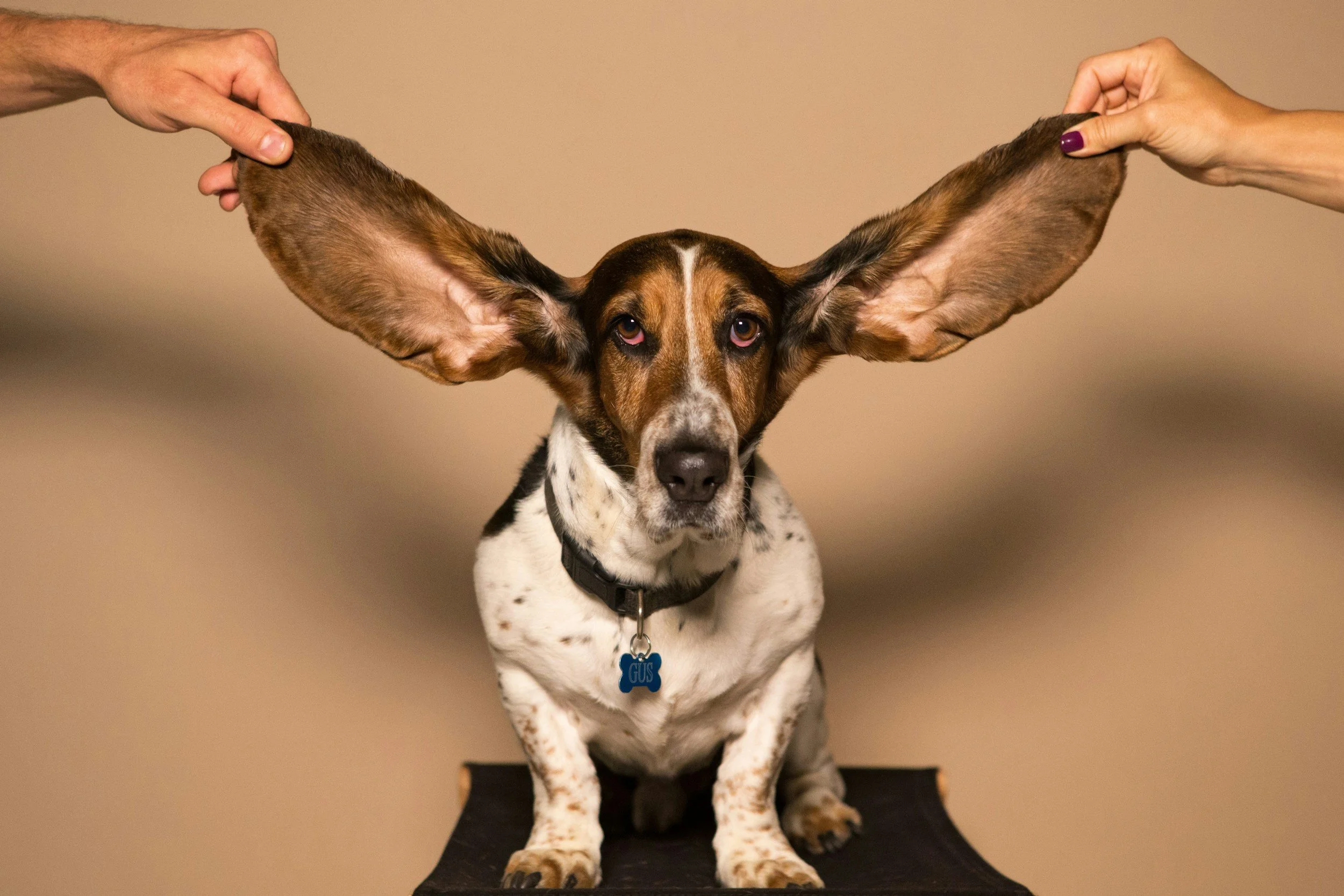
We have extensive experience in treating ear conditions in dogs and cats
For any ear issue we recommend booking a 1-hour initial dermatology appointment with Dr Gill for an assessment and treatment plan to get your pet’s ears feeling better.
Why do pets get ear problems?
Allergies are the most common cause of itchy ears and secondary ear infections in pets. Allergy symptoms can be year-round or seasonal. One of the main reasons why pets can suffer from recurrent ear issues is that underlying allergic inflammation needs to be managed.
Other causes of ear discomfort and infection can include foreign bodies in the ear (eg. grass seed awns), hormonal conditions, immune-mediated conditions, anatomic abnormalities such as very narrow ear canals, ear canal growths or polyps, or middle ear disease.
Video Otoscopy
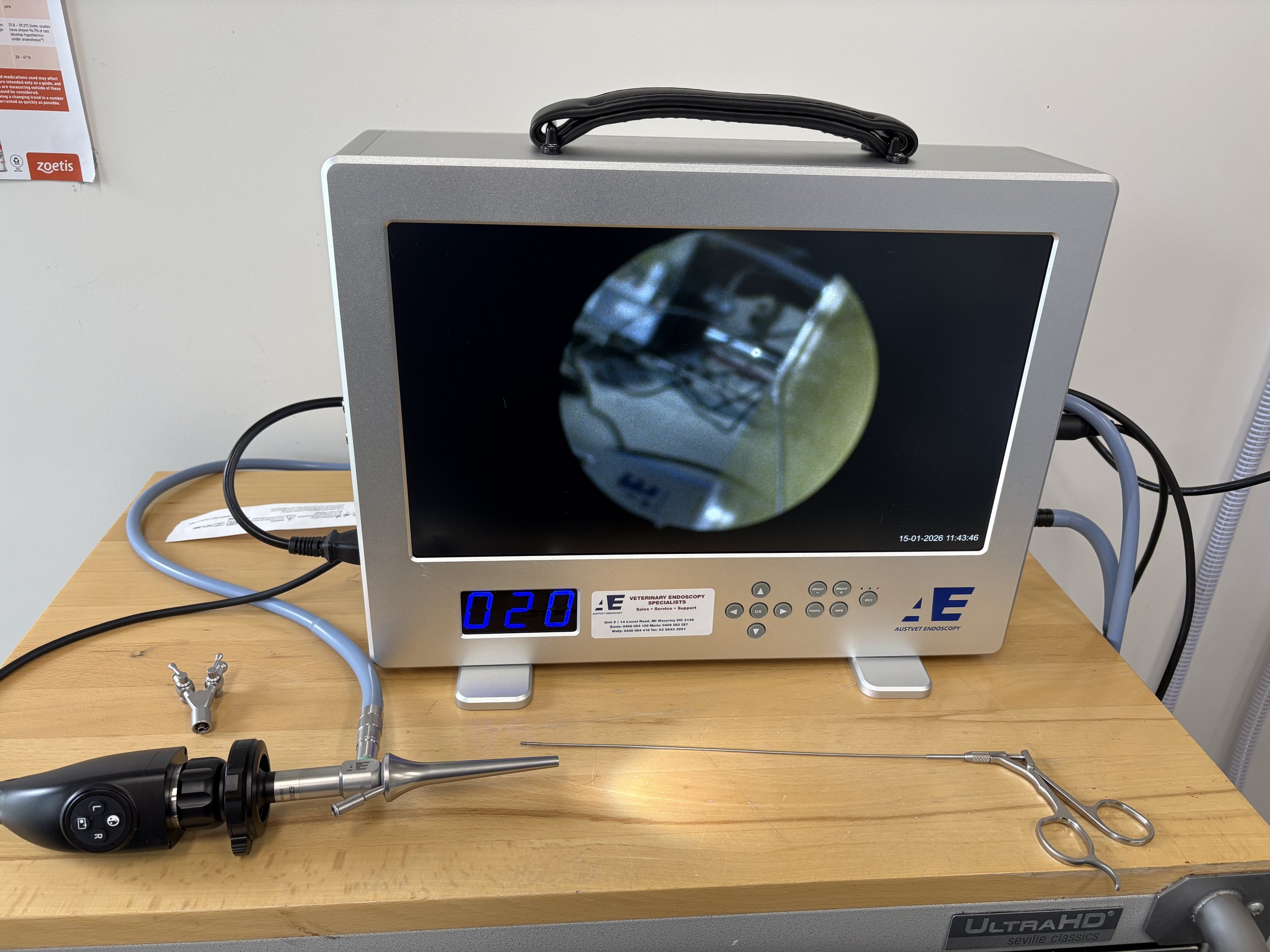
If your pet has a recurrent or severe ear issue, we may recommend video-otoscopy. This is a special camera that allows us to look deep into your pet’s ears.
Our video-otoscope has a bright light and magnification and a clear image is viewed in real-time on a large screen allowing accurate evaluation of the ear canal and eardrum (also known as the tympanic membrane).
It allows us to identify underlying problem such as foreign-bodies, tumours, polyps, impacted debris or deep ear complications such as ruptured tympanic membranes and middle ear infection (otitis media).
For ear canals where there is a lot of debris or chronic infection a video-otoscope guided deep ear flush can be an important step towards resolving the ear issue.
Advanced imaging such as CT scan may be recommended prior to an ear-flush if there is any concern for otitis media.
Video-otoscopy is usually performed under general anaesthesia for your pet’s comfort.
Not every pet with an ear problem needs video-otoscopy, but it can be a very helpful diagnostic tool.
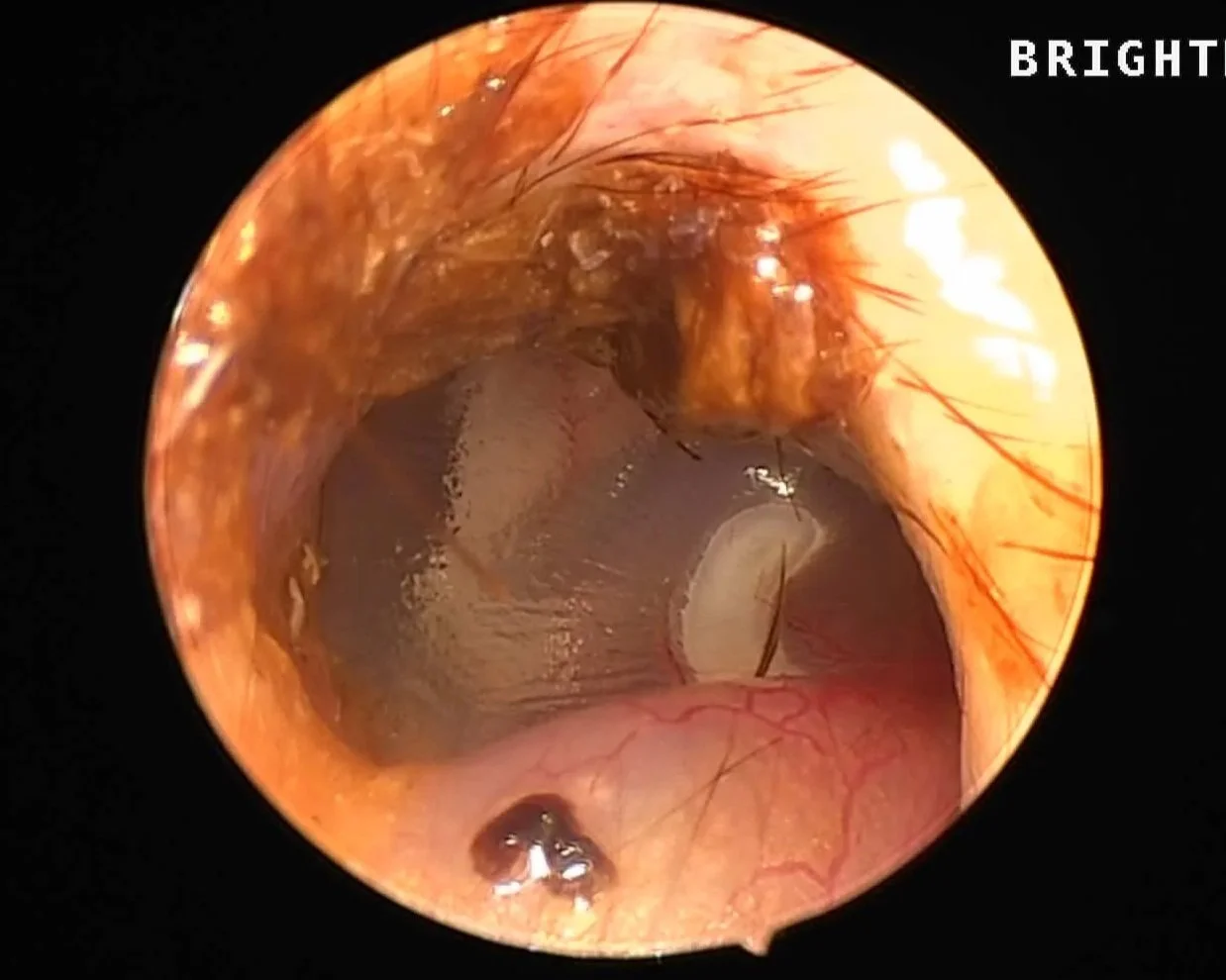
A normal ear drum (dog)